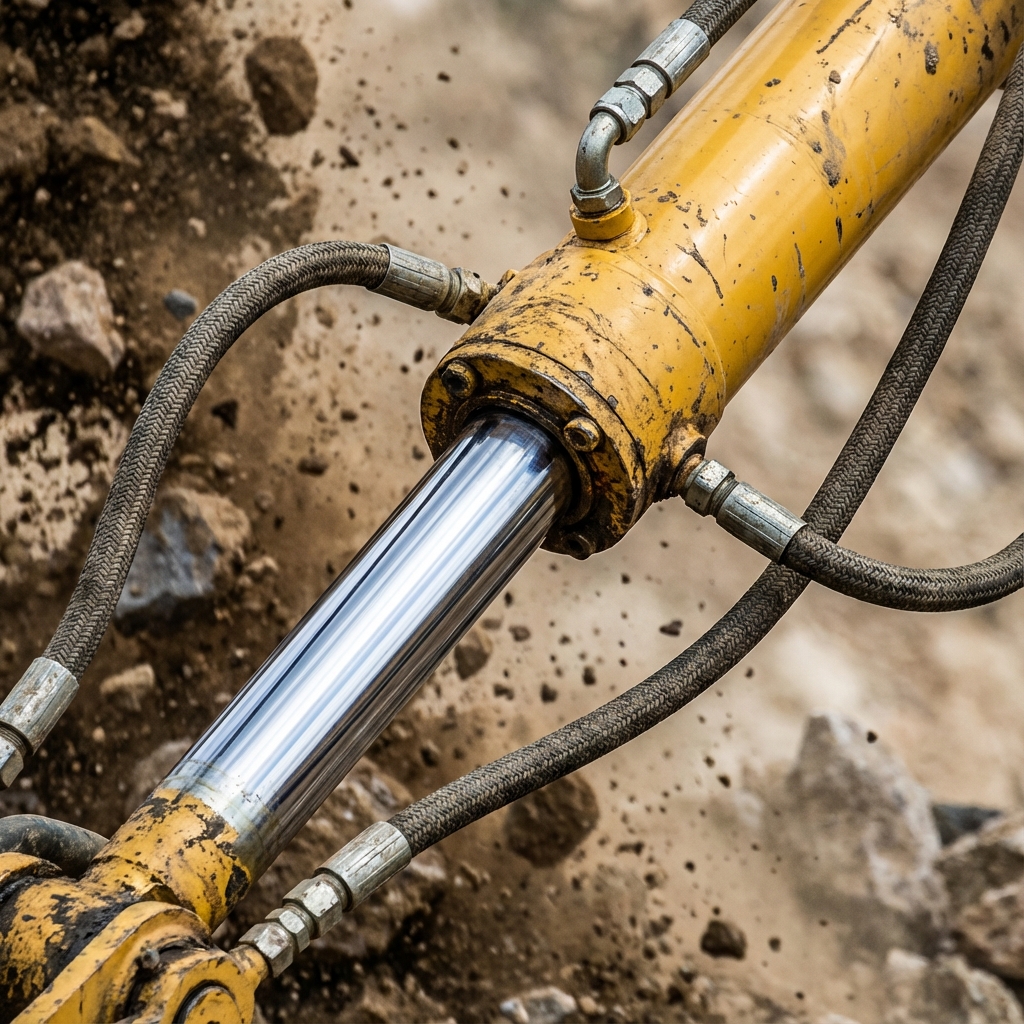
When you think of the construction and agricultural industries, you quickly envision an excavator. Excavators are essential in these sectors, whether if you need one for excavation or demolition works. But without hydraulic systems, these machines would be useless. But how exactly does an excavator work, and why are hydraulic systems so indispensable? In this article, we will explain everything.
How does an excavator work?
Let's start with the main question: An excavator uses a hydraulic system that allows fluids, usually oil, to generate immense power. This is a motor that uses a pump to create pressure in the oil. The oil is pushed through pipes and hoses to cylinders. When the oil enters a cylinder, it pushes a piston out, creating movement. This movement powers the arm, bucket, and tracks of the excavator. This simple but powerful principle is the basis for the performance of the entire machine.
The excavator engine pumps oil through the hydraulic system. Valves control the flow of oil to specific cylinders. The operator controls the valves with joysticks in the cabin, allowing them to control the movements of the excavator. The more the operator pushes the joystick, the more oil flows to the cylinders, and the faster the movement follows.
What is a hydraulic system?
A hydraulic system converts mechanical energy into hydraulic pressure, enabling the transmission of power and movement. The energy is used to move the various parts of the excavator. The main components of a hydraulic system in an excavator are:
- Hydraulic pump: Converts mechanical energy into hydraulic energy, creating a continuous flow of pressurized oil.
- Hydraulic valves: Regulate the flow of hydraulic oil to different cylinders and motors.
- Hydraulic cylinders: Convert hydraulic pressure into mechanical movement, enabling linear force for lifting.
- Hydraulic motors: Convert hydraulic pressure into rotational movement (for tracks and swing function).
Hydraulic systems are the heart of the excavator, providing the necessary power for digging and moving materials. With high efficiency, they provide energy-efficient movements.
Single-acting vs. Double-acting Hydraulic Systems
Hydraulic cylinders come in two main types: single-acting and double-acting. The difference lies in how they generate force and movement.
A single-acting hydraulic cylinder exerts force in only one direction. For example, it forces the boom to lift, but gravity brings it down. A double-acting hydraulic cylinder exerts force in both directions (extending and retracting). This provides more control and power.
Key Hydraulic Functions
The hydraulic system drives various functions of the excavator. Below are a few examples:
Movement of the boom, arm, and bucket
The boom, arm, and bucket are the most obvious components of an excavator. They work together to dig, lift, and dump materials. Hydraulic cylinders enable these powerful movements, allowing for precise control.
Rotating the upper structure
A hydraulic swing motor connects the upper structure with the undercarriage, allowing the upper structure to rotate 360 degrees. This movement is driven by hydraulic pressure that powers a swing ring, making it easy to position the machine in various directions.
Driving the tracks
Some excavators use tracks. Hydraulic motors power these tracks, with the operator having precise control over speed and direction. This enables smooth movement in tight spaces and better grip on uneven ground.
Specialized Hydraulic Functions
In addition to general functions, there are specific hydraulic functions that enhance an excavator's versatility.
Hammer line: This function is mainly used for hydraulic hammers attached to the boom of hydraulic excavators. The hammer line allows the excavator to apply powerful force, often used to break concrete or rocks on construction sites.
Quick coupler function: The quick coupler function allows the operator to change attachments without manual intervention. This system uses hydraulic pressure to lock/unlock buckets, grabs, or hammers, making the machine highly adaptable for work.
Rotation line: The rotation line is indispensable for operating rotating attachments like a clam shell bucket or hammer line. It allows the attachment to rotate 360 degrees, whether partially or fully, suitable for dumping precise amounts in piles.
Additional excavators hydraulic functions make lifting operations for construction and agricultural vehicles. These systems prevent both the boom and arm cylinder from falling when digging and loading and for demolition and material handling. Regular testing procedures are essential to ensure the capability provided by these hydraulic systems. Want to know more? Contact our experts today.